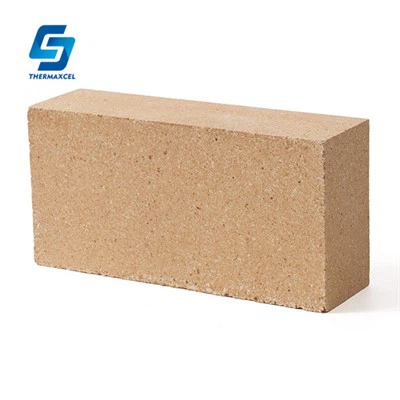
In the application of industrial furnace lining materials, the usage proportion of refractory castable is still higher than that of refractory precast block. This is mainly attributed to the characteristics of refractory castable, such as short production cycle, convenient construction, and excellent overall performance of the furnace lining. However, from the perspective of usage period and durability, refractory precastings perform better than refractory castables. Although they have the same raw material ratio and chemical composition, precastings need to go through two processes: mold forming and low-temperature baking, which gives them unique advantages in construction convenience and service life.

The application characteristics of refractory castables
Refractory mortars have dominated large-scale furnace lining projects due to their significant economic and construction advantages:
1. Quick production
Refractory mortars do not require pre-made molds. They can be immediately mixed and used according to on-site needs, significantly shortening the supply cycle.
2. Lower cost
Compared to prefabricated components, mortars eliminate the mold-making and drying processes, resulting in a significant reduction in material costs and production costs.
3. Strong overall performance During large-scale construction, the casting material can form a continuous refractory structure, reducing the number of joints and enhancing the overall stability of the refractory lining.
Technical advantages of refractory precast products
Although their overall usage is less than that of castable materials, refractory precast products demonstrate irreplaceable technical advantages in specific application scenarios:
1. Construction convenience
The precast products are preformed according to the specifications and dimensions of the usage location, and the on-site installation is simple, which can effectively shorten the construction period.
2. Long service life
The precast products that have undergone low-temperature baking have fully removed internal moisture, and their internal structure is more compact. Their anti-corrosion performance and service life are superior to those of on-site cast furnace linings.
3. Simplified drying process
The precast products have undergone drying treatment before leaving the factory, and only need to be baked on-site for use, reducing the on-site curing process.
Typical Application Scenario Analysis
1. Furnace Bottom of the Kiln
The furnace bottom of the kiln generally uses refractory precast block pieces as the refractory material. This part has high requirements for construction quality and service life. The pre-drying characteristic of the prefabricated pieces makes them perform well in such static load environments, which is both convenient for construction operations and can significantly extend the service life.
2. Inner Liner of the Rotary Kiln
In recent years, the inner liner of the rotary kiln has gradually adopted a composite masonry technology combining refractory prefabricated pieces and refractory castable. This technical solution takes into account the overall requirements of the rotating equipment, simplifies the layout of the anchoring system, and achieves the unity of structural stability and construction convenience under dynamic conditions.
Constraints and Development Trends
The main constraints for the promotion and application of refractory precast products lie in two aspects: Firstly, the mold manufacturing and drying processes increase production costs; secondly, the production cycle is relatively long, making it difficult to meet the demands of urgent projects. Therefore, precast block products are currently mainly used in special locations and key areas, and their overall usage proportion remains limited.
As industrial furnaces and kilns develop towards larger sizes and longer service lives, the application scope of refractory precast products is expected to gradually expand. In the future, measures such as optimizing mold design and improving drying processes can be taken to reduce the production costs of precast products, enhance their market competitiveness, and achieve complementary development with refractory mortars.