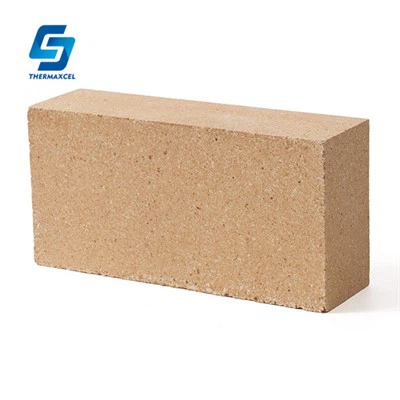
The query high alumina brick is one of the most common "buyer-intent" phrases in industrial refractories. People search it when standard fireclay solutions cannot meet life targets, or when the operating zone demands stronger resistance to heat, wear, and corrosion. But buying high alumina brick is not only about selecting a high alumina percentage. Buyers must match the brick to the zone's failure mode and verify key QC items that determine consistency.
Thermaxcel explains how to choose high alumina bricks, what to check before ordering alumina brick, and how to structure an RFQ that leads to the right recommendation.

1) What problem does high alumina brick solve?
High alumina bricks are typically evaluated when a lining must survive higher temperature, stronger abrasion, or harsher chemical conditions than general fireclay bricks. Buyers searching high alumina bricks often have one of these pain points:
frequent spalling during thermal cycling,
rapid wear in material-contact zones,
unstable lifetime across different batches,
cracks or deformation under mechanical load.
The correct purchase decision starts by defining which failure mode is dominant.
2) The buyer's selection logic: zone first, then brick grade
Instead of selecting by "highest number," use a zone-driven method:
A. Heat + cycling zones (spalling risk)
If thermal cycling is frequent, thermal shock behavior often controls lifetime. In these zones, selecting a brick that balances strength and crack resistance is critical.
B. Wear zones (abrasion/erosion)
High alumina bricks can improve wear resistance in many applications, but surface wear depends on density/structure consistency as much as chemistry.
C. Chemical attack zones
If the zone suffers chemical corrosion, brick selection must match the attack type. A wrong chemistry fails quickly even if the temperature rating is high.
3) What should buyers verify?
Search terms like apparent porosity high alumina brick typical show what buyers really worry about: whether the brick structure is consistent. In real procurement, verify these items consistently across batches:
dimensional tolerance and shape consistency,
visible defects and edge integrity,
density/porosity control (because it influences strength and corrosion behavior),
batch-to-batch consistency evidence (COA alignment with production).
Even if you do not publish all values on-page, you should design your RFQ and QC checklist so suppliers can quote the correct grade and control stability.
4) Why alumina bricks manufacturing process matters to buyers
The query alumina bricks manufacturing process reflects a trust and risk question. Buyers want to know whether the supplier can control:
raw material stability,
forming consistency,
firing control and final structure repeatability.
For buyers, the "process" question is really a "consistency" question. If a supplier cannot demonstrate stable control, lifetime becomes unpredictable and maintenance planning becomes difficult.
5) When do phosphate bonded high alumina bricks matter?
Your query set includes phosphate bonded high alumina brick, phosphate high alumina brick, and phosphate high alumina fire brick. These searches usually appear when buyers want:
specific bonding behavior for certain conditions,
faster turnaround or zone-specific repair logic,
a brick solution aligned with a known installation or service requirement.
If buyers also search custom phosphate bonded high alumina brick or phosphate bonded high alumina brick supplier, it indicates procurement intent is already in "project mode." That's the right moment to request drawings, zone conditions, and target lifetime in one package.
6) Common mistakes buyers make
Mistake 1: Buying "high alumina brick" as a generic item
High alumina brick is a category; zone conditions decide the right grade.
Mistake 2: Ignoring structural consistency
If porosity/density control is unstable, performance becomes unstable. That's why buyers keep searching apparent porosity and process-related terms.
Mistake 3: No alignment on bonding requirement
If the application needs phosphate bonding logic, clarify early to avoid recommending the wrong family.
If you want high campaign life, choose high alumina brick by zone and failure mode, then verify structural consistency and QC controls. A clear RFQ-especially when phosphate bonded high alumina brick is involved-reduces mistakes and improves batch stability.