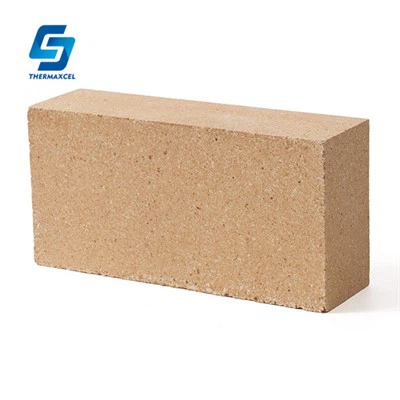

The relationship between raw material quality and finished brick performance is more direct than most buyers account for in their specifications. Dead burned magnesia (DBM) is the primary raw material in magnesia brick, magnesia carbon brick, and magnesia chrome brick. Its purity, crystal size, and impurity profile determine the brick's refractoriness, slag resistance, and high-temperature structural stability more than the pressing pressure or firing temperature at the brick plant. Two bricks with identical geometry and apparent density can perform very differently in a steel ladle or cement kiln burning zone if the DBM feedstock differs in grade.
What DBM specification numbers actually mean - and which ones matter for a given application - is the difference between a successful lining specification and an unexplained campaign failure.

What Dead Burned Magnesia Is and How It Is Made
Dead burned magnesia is produced by calcining magnesite (MgCO₃) or precipitated magnesium hydroxide at temperatures above 1500°C - typically 1600°C to 2000°C in shaft kilns or rotary kilns. At these temperatures, MgO crystals sinter and grow. The resulting material is dense, chemically stable periclase (MgO) with large crystal grain size and low reactivity. "Dead burned" distinguishes it from the more reactive "light burned" or "caustic calcined" magnesia used in chemical and environmental applications, which is fired at lower temperatures and remains highly porous and reactive.
The sintering temperature and raw magnesite quality control the three parameters that determine DBM's value as a refractory raw material: MgO purity, bulk density of the fired grain, and periclase crystal size.
Thermaxcel's magnesia refractory products are manufactured using DBM with MgO content from 95% to 98% depending on the brick grade. The difference between those two numbers is not cosmetic.
MgO Purity: Why the Impurity Profile Matters More Than the Headline Number
DBM purity is stated as MgO percentage by mass. The balance - 2–5% in standard grades - is SiO₂, CaO, Fe₂O₃, Al₂O₃, and B₂O₃ in proportions that vary with the source magnesite deposit and processing method.
The headline MgO percentage tells you little on its own. What matters is the distribution of those remaining impurities, because different impurities attack brick performance through different mechanisms.
CaO/SiO₂ ratio is the single most important impurity relationship in magnesia refractory. At ratios below 1.87 - the point at which all available lime is tied up as dicalcium silicate (2CaO·SiO₂) - free silica forms low-melting forsterite (Mg₂SiO₄) and monticellite phases at grain boundaries during firing. These phases melt in the range of 1500–1600°C. In a steel ladle or cement kiln burning zone, that means the grain boundary bonding becomes liquid at exactly the temperatures where structural load-bearing matters most. Refractory-grade DBM is specified with CaO/SiO₂ ≥ 2.0 for steelmaking applications as a minimum. High-grade DBM for converter and ladle use runs 2.5–3.5.
B₂O₃ (boron trioxide) is present in trace quantities in DBM from certain magnesite deposits, including some Chinese sources. Above 0.05%, it forms low-viscosity glassy phases at grain boundaries that persist from around 900°C through the full service temperature range. A brick made from high-boron DBM creeps under load at temperatures well below its rated working temperature. This failure is difficult to diagnose from the failed brick - the glass phase is often not visible without electron microscopy. It is the impurity most commonly omitted from supplier documentation, which is exactly why it is worth requesting specifically.
Fe₂O₃ acts as a sintering aid - it accelerates densification during firing but also forms low-melting ferrite phases at grain boundaries that reduce resistance to basic slag penetration. For magnesia carbon brick used in direct contact with iron-rich basic slag in converters and electric arc furnaces, lower Fe₂O₃ DBM is the right specification.
Crystal Size: The Parameter That Controls Slag Resistance
Periclase crystal size in DBM is determined by sintering temperature and duration. Higher firing temperatures produce larger crystals. Larger periclase crystals mean fewer grain boundaries per unit volume - and grain boundaries are the primary pathway for slag infiltration into the brick microstructure.
DBM fired at 1700°C produces periclase with average crystal size in the 100–150 micron range. DBM sintered at temperatures approaching 2000°C - using electric shaft kilns or high-temperature rotary kilns - produces crystals of 300–600 microns. The slag infiltration resistance difference between these two ranges is measurable. Larger crystals present a longer, more tortuous path for liquid slag traveling through the brick.
High-fired, large-crystal DBM is specified for magnesia brick in direct contact with basic slag: steel converter linings, ladle slag zone, cement kiln burning zone, and the hot face of non-ferrous smelting furnaces. In copper smelting converters - where magnesia chrome brick remains the standard choice for the tuyere line - large-crystal DBM is equally critical to the MgO component's contribution to accretion layer stability. Standard DBM is adequate for backup positions and applications where slag contact is indirect or limited.
Apparent density is the practical proxy for crystal size. High-temperature sintering that produces large crystals also produces dense grains with low internal porosity. Refractory-grade DBM is specified at bulk density ≥ 3.20 g/cm³, with premium grades reaching 3.30–3.35 g/cm³.
How DBM Quality Translates Into Finished Brick Performance
Three measurable brick properties carry the raw material quality signal directly into service behavior.
Refractoriness under load (RUL). This is the temperature at which a brick under defined compressive load shows 0.5% deformation. For magnesia brick made from 95% MgO DBM with CaO/SiO₂ of 1.9, RUL T₀.₅ is typically 1540–1580°C. For brick from 97% MgO DBM with CaO/SiO₂ of 2.5, RUL T₀.₅ rises to 1620–1650°C. That 70°C difference is the margin between a brick that holds structural load in a cement kiln burning zone at 1600°C operating temperature and one that deforms progressively during the campaign.
Apparent porosity. Higher-purity, large-crystal DBM sinters to lower apparent porosity in the finished brick. Standard magnesia brick from 95% MgO DBM achieves apparent porosity of 14–18%. Premium brick from 97%+ MgO large-crystal DBM achieves 12–15%. Lower porosity reduces the volume available for slag infiltration and slows the rate at which the bonding matrix is attacked from the hot face inward.
Cold crushing strength after slag infiltration. This test - measuring residual mechanical strength after controlled exposure to molten slag - is the most direct measure of slag resistance. DBM purity and CaO/SiO₂ ratio are the variables that most strongly predict performance here. A brick meeting standard CCS specification on delivery but made from low-grade DBM will lose strength faster after slag exposure than one built from premium DBM. Standard CCS on the delivery certificate does not tell you this. The DBM raw material certificate does.
What to Ask Your Supplier - Before You Specify
A magnesia brick supplier who cannot provide the following data for their DBM feedstock cannot guarantee brick performance under your service conditions:
MgO content (%), with test method cited (XRF to ISO 10058 or equivalent)
CaO/SiO₂ ratio
Fe₂O₃ content (%)
B₂O₃ content (%) - request this specifically; it is frequently omitted
DBM bulk density (g/cm³) as a proxy for sintering intensity and crystal size
Source deposit or production process (shaft kiln vs rotary kiln, peak firing temperature)
These are not unusual requests. Any serious magnesia refractory manufacturer tracks this data for the DBM they purchase. If the response is that the information is proprietary or unavailable, that tells you something concrete about how the supplier manages their raw material quality chain.
Thermaxcel's Magnesia Brick Range
We manufacture magnesia brick, magnesia carbon brick, and magnesia chrome brick using DBM at MgO grades of 95%, 97%, and 98%, with CaO/SiO₂ controlled above 2.0 across the standard range and above 2.5 for converter and ladle-grade products.
For each order, we provide the DBM certificate of analysis alongside the finished brick test report - covering MgO content, CaO/SiO₂, bulk density, apparent porosity, cold crushing strength, and RUL where applicable. Third-party testing through accredited labs is available on request.
If you are specifying magnesia brick for a steel ladle, converter, or cement kiln burning zone, contact our technical team with the furnace type and service temperature. We will provide the DBM grade and finished brick specification relevant to your conditions - not a generic datasheet.
Published by Thermaxcel Refractory Technical Team | Contact Us